What consequence governs?
Consequence reveals what is truly at stake. It brings together the people, knowledge and decisions needed to carry it.
They struggle because they can’t access the intelligence they already have.
01
Intelligent by Design
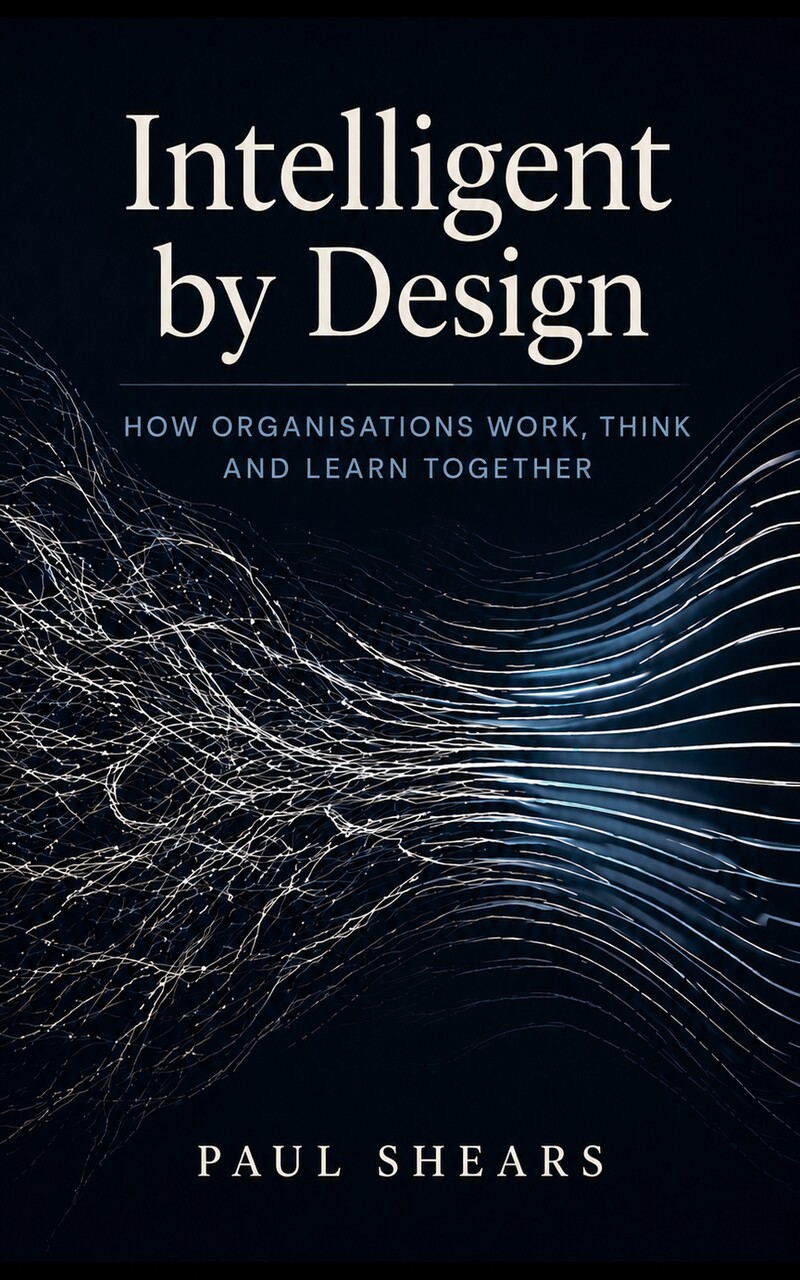
Intelligent by Design examines the foundations of organisational performance—the conditions that allow intelligence to work and on which strategy, governance and operating models depend.
The book does not seek to replace the models or methods you already use. It helps reveal whether your organisation has the conditions needed to make them work.
02
The approach
Consequence reveals what is truly at stake. It brings together the people, knowledge and decisions needed to carry it.
Consequence rarely respects organisational charts or formal boundaries. The community carrying it includes everyone whose intelligence or actions can influence the result.
Capability may already exist. How effectively it can be used depends on whether intelligence can surface, cross boundaries, be understood and influence decisions in time.
03
A diagnostic view
Formal structures may be correct while the community remains unable to think or act together. This approach looks for the conditions beneath performance.
04
Applications
Test whether the governing consequence is understood and whether capability, alignment and decision rights keep plans grounded in reality.
Identify the community carrying the consequence across organisational, professional and contractual boundaries.
Identify where centralisation, fragmentation or competing incentives prevent the organisation’s intelligence from being used.
Test and inform organisational design and review processes by examining their assumptions about information, authority and alignment.
The book
How organisations work, think and learn together
Written for senior leaders, Intelligent by Design makes complex ideas about collective intelligence accessible by grounding them in recognisable organisational situations. It shows how consequences, communities and interfaces shape whether capable people can think and act together.
Beneath misleading reports, broken information flows and misplaced authority are more fundamental conditions: whether reality can be recognised, knowledge can cross boundaries and combine, and people can organise around what is genuinely at stake.
These conditions form the foundations on which established models and methods depend. By making them visible and easier to examine, the book helps leaders understand what may need to change for those approaches to work as intended.
05
Contact
If the book has helped you see something differently in your organisation, or raised questions about the consequences it carries, I’d be pleased to hear from you.
You’re also welcome to get in touch if you would value some help untangling those consequences and the communities carrying them.
Email Paul06
About the author
Paul Shears served as an air force engineering officer before moving into senior executive roles in industry. Across more than four decades of military and industry experience, he has led people and organisations through complex operational, commercial and organisational challenges.
His work has spanned aviation, engineering, maintenance, program delivery and business leadership. Intelligent by Design distils what those experiences taught him about how organisations think—and what enables capable people to act intelligently together.
Connect with Paul on LinkedIn